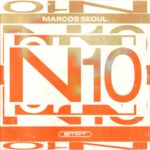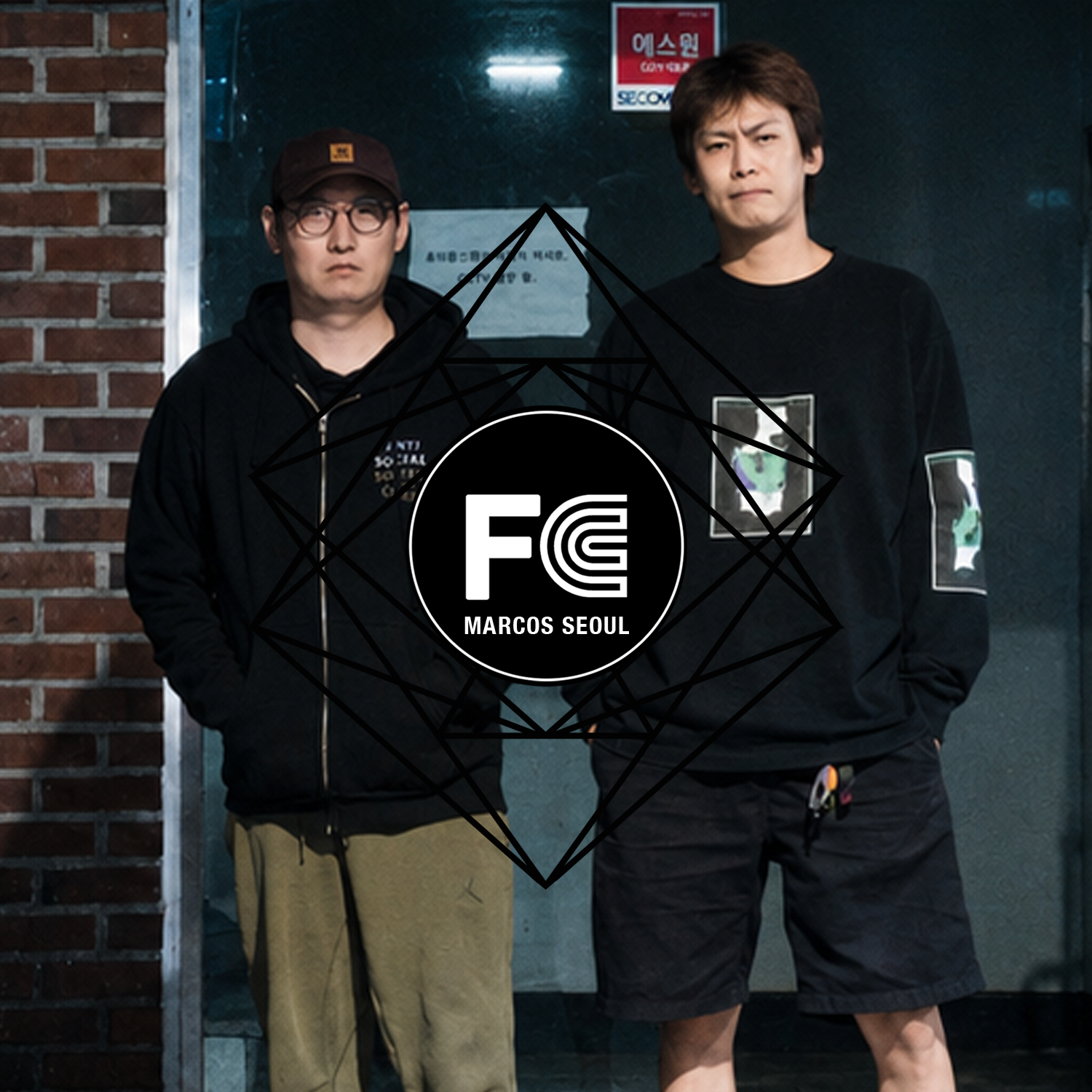
Today we’re speaking with Marcos Seoul — the Seoul-based duo of Jin and Kade — just as their debut EP N10 on Southpoint starts making real noise. The three-track UK garage project has already found its way onto Apple Music’s official UKG playlist with “Lovebee (Rework),” while the EP itself climbed to No. 20 on Beatport’s UK Garage / Bassline releases chart. It’s a sharp introduction to a pair of producers who bring deep house instincts into the current speed garage and UKG conversation, and the perfect moment to dig into their sound, their Deep S(e)oul imprint, and the exclusive mix they’ve put together for the Future Classics mx series.
Can you introduce yourself and the Marcos Seoul x Deep S(e)oul projects for anyone who hasn’t heard it yet?
We’re Marcos Seoul, a duo formed by house producers Jin, also known as J Symposium, and Kade. We’re based in Seoul, and our music brings together the depth and groove of house with the energy of UK garage and speed garage.
We both spent years listening, playing and producing before starting this project. Marcos Seoul gave us a place to bring those experiences together and see where they could take us. There is a lot of history behind what we make, but we’re interested in what we can do with it now.
Deep S(e)oul is our label and the wider platform we’re building around the music. Marcos Seoul is where you hear our own conversation taking shape.
How has being based in Seoul shaped the music you make or the way you work?
Seoul has a remarkable concentration of people making music. K-pop has made the scale of its production culture visible internationally, but there are also independent producers, small communities and underground dance floors working on very different ideas. We see it becoming an increasingly important meeting point for music in Asia.
The city moves quickly. There is a real appetite for what comes next, and that energy finds its way into how we work. At the same time, some of its most interesting music takes a little searching to find.
Living here gives us access to that contrast. We can absorb what is happening internationally while hearing it through the experiences we’ve had in Seoul. That perspective is something we want to carry into our records.
Take us back to the beginning—what were the earliest records, club nights, or local scenes that pulled you into electronic music and shaped your ear as selectors?
For Jin, it began at home. His grandfather was a composer, and his father was a serious record collector, so there was always music to discover. At around seven, he was already experimenting with sounds from vinyl and cassette tapes. Later, the music of Chicago and Detroit opened another world. That became a lasting connection with deep house, Chicago house, jackin’ house and tech house.
Kade’s route into house began on the dance floor. He became fascinated by how a small change in the groove could shift the atmosphere of an entire room. That attention to the relationship between a record and the people hearing it became part of his approach to music.
Both of us went on to hold residencies at Club Tool in Seoul. It was an important home for house music, with a history that included artists such as Kaskade and Nujabes. The club is gone now, but its motto, “Keep it underground,” has stayed with us.
As the wider club landscape changed, Tool gave us space to stay close to the music we believed in. A residency teaches you to listen differently. You learn what holds a room, what needs time and what remains after the obvious moment has passed.
Your profile tags x coins “Deep Tech Speed Garage.” How would you describe the sound you’re going for right now?
What draws us to the current UK garage and speed garage movement is its openness. New sounds keep appearing, and listeners seem willing to follow the music into unfamiliar places. It makes the genre exciting to work in, and quite demanding too.
We started asking what we could bring to that space from our own musical history. The depth and patience of deep house, the groove of Chicago house and the tension of tech house all began finding their way into the tracks.
As more records came together, a particular sound started to emerge: house instincts carried by the momentum and bass pressure of speed garage. “Deep Tech Speed Garage” is a useful way to describe that meeting point. We still want to leave room for the next record to surprise us.
A lot of your recent tracks are free downloads (Big Room Dub, One More Hit Dub, Brand New Dub, etc.). What made you decide to release that way?
The decision was quite simple. Artists are expected to spend more and more time creating content around their music. We asked ourselves whether to spend that time planning something to catch people’s attention, or use it to make another record they might want to play.
For us, making the next track was the natural choice.
Free downloads give the music a way into other DJs’ sets. Once somebody plays one of our tracks in a room we’ve never visited, it starts reaching people in a way we couldn’t have planned from the studio. We like that possibility.
There is a place for considered label releases and a place for giving a record directly to the people who will use it. Both are part of how we want the music to travel.
You also drop a lot of bootlegs and edits. How do you choose what to flip, and what makes a good bootleg for you?
It usually starts with a track we want to play. There might be a vocal, a rhythm or a particular feeling that stays with us, and we begin hearing how it could work inside one of our sets.
We want to preserve whatever made us connect with the original while bringing it into our own musical language. Sometimes that means changing the groove completely. Sometimes a smaller change gives the whole record a different weight.
For us, a good bootleg has a reason to exist on the dance floor. There should be something in the new version that makes you want to reach for it. The pleasure comes from recognising a familiar idea and feeling it move differently.
You’ve got Deep S(e)oul as a label/imprint. What’s the idea behind it, and how does it relate to the SoundCloud material?
Deep S(e)oul is our imprint and a longer-term idea about what we can build around the music. The SoundCloud releases are an early way of making our taste audible and connecting with people who respond to it.
There are distinctive producers in Seoul whose music deserves to travel further. We want to create a place where those artists can meet listeners and collaborators elsewhere, and where people from other cities can bring their own ideas into Seoul.
Our ambition is for the city to become a place people actively look towards for new club music. That takes records, relationships and spaces where the exchange can happen.
We’re interested in producers with a point of view. Someone might make music very differently from us and still belong in that conversation. That is the kind of identity we want Deep S(e)oul to develop.
Who are some of the artists or labels currently influencing the direction you’re taking?
There are too many to list, but Southpoint is a good example. Our first EP, N10, is coming through the label, and we’re interested in how it has connected garage and 140 within a wider musical identity. Those sounds have a shared spirit, and bringing them together gives artists more room to explore.
With Interplanetary Criminal, we admire the patience and conviction we hear in the way his work develops. From the outside, it feels like watching somebody gradually realise a very clear musical vision.
That matters to us. We work quickly in the studio, but we want to give the bigger ideas time. There is a difference between making another track and building a body of work you can stand behind.
How does the process differ when you’re making an original versus a bootleg or VIP?
The biggest difference might be the amount of stress.
With an original, we’re deciding what the entire record wants to become, so there is more pressure to get everything right. We usually begin with a clear intention, although the music has a habit of taking us somewhere else.
VIPs often arrive through the process of revisiting a track. A small experiment opens another possibility, and suddenly there is a version we hadn’t planned to make.
Bootlegs have some of the pleasure of digging. We find a record that excites us and respond to it. There is already something pulling us into the session.
The starting points are different, but eventually the same question takes over: do we want to hear this in a club?
You’ve shared studio mixes and live sets. What do you try to capture in those that doesn’t come across in individual tracks?
A mix lets us work with the energy between records as well as the energy inside them. A track can feel completely different depending on what came before it and what you allow to happen afterwards.
For this mix, we imagined a dance floor in front of us. We thought about the exchange with the people in the room: when to build pressure, when to hold something back and when to give everyone a little space.
Although every production is ours, we wanted the sequence to feel like a set people could inhabit. The club is where we ultimately want these records to meet their audience. A mix gives us a way to suggest that experience before we’re all in the same room.
What are you working on next, and is there anything you want people to know about the Future Classics mix?
Alongside our releases, we’re involved in sound design for a global automotive company and a compilation featuring producers from Seoul. They place us in quite different working environments, which makes them interesting. The compilation is also a chance to bring several perspectives from this city together and let people hear what is developing here.
The Future Classics mix gives a closer view of our own work in progress. It is made entirely from Marcos Seoul productions, including originals, remixes, bootlegs and unreleased material. You can hear several directions we’re exploring within one continuous set.
We wanted to share enough for people to get a sense of where we are, while leaving a few things for them to discover as the music comes out.
Any particular Vancouver or Canadian connections, or scenes you’ve been paying attention to?
We haven’t played in Canada yet, so those connections are still beginning. This mix is part of that process.
We’ve been hearing more about UK-influenced sounds finding their way into clubs across North America. We’re curious about how the music changes from city to city, because a local crowd always brings something of its own to a sound.
We would love to experience that in Vancouver rather than only hearing about it from a distance. There is a kind of understanding you get by playing records in front of people that is difficult to build any other way. Hopefully we’ll have the chance to share a room with a Canadian crowd before too long.
Are there one or two standout moments, unreleased IDs, or personal edits in this mix that you’re especially excited for listeners to hear? What’s the story behind them?
“That Feeling” is one we would point people towards. It’s also one of the tracks we chose for our USB essentials, so it gives listeners another point of reference for the music we keep returning to ourselves.
There are also tracks from N10, our first EP on Southpoint, woven through the mix: “Change,” “Now It’s Gone” and “Lovebee.” Hearing them alongside the other productions gives a wider picture of the music surrounding that release.
There is a lot here that people may not recognise yet. As some of those tracks find their way out, we like the idea of listeners returning to the mix and realising they had heard them here first. It could become a different listening experience over time, even though the recording itself stays the same.
And lastly, what’s next? Where should people be expecting to see and hear from you next?
N10 on Southpoint is the next release to look out for, with more music taking shape behind it. We’re also having conversations about shows in North America, and we hope 2027 will bring an opportunity to meet audiences there, including in Canada.
We started Marcos Seoul in March 2026 and signed our first label deal less than three months later. During those first three months, we made more than a hundred tracks. Being two full-time producers made that possible, but it also reflects how much of ourselves we put into the project.
That commitment is the part we intend to keep. There is a lot we want to do, and we’re happy to build it record by record. We want to arrive in those rooms with music people have already made part of their lives.
Future Classics Mix vol 81 | Mixed by Marcos Seoul Tracklist:
1. Marcos Seoul Feat. Jake – Do Both
2. Marcos Seoul – Send 6 Days Ago
3. Marcos Seoul – Say What You Got to Say
4. Marcos Seoul – Bad Form
5. Marcos Seoul – Check This Out
6. Marcos Seoul – One More Hit Dub
7. ID – ID (Marcos Seoul Dub)
8. Marcos Seoul – Too Clean
9. Marcos Seoul – Same Frequency
10. Marcos Seoul – Change (Extended Mix)
11. Kaskade & Crankdat – A Little Bit (Marcos Seoul Remix)
12. Marcos Seoul – That Feeling
13. Marcos Seoul – Now It’s Gone (Extended Mix)
14. ID – ID (Marcos Seoul Dub)
15. ID – ID (Marcos Seoul Dub)
16. Marcos Seoul – Keep It Underground
17. Marcos Seoul – Heads Ringin’
18. Marcos Seoul – Crown Check
19. Marcos Seoul – That Way Won’t
20. Marcos Seoul – Where Is Jack_
21. Dubvision – Follow Your Heart (Marcos Seoul Remix)
22. Marcos Seoul – Lovebee (Extended Mix)
23. Marcos Seoul Feat. Mia – See Me Fly (177 Mix)